
Mental health
Our approach
We work alongside mental health providers, system leaders and community partners to improve inpatient flow, strengthen community alternatives and support earlier, safer discharge.
Our approach combines behavioural science, pathway redesign and data-driven insight with hands-on implementation support. We focus on changing how decisions are made in practice — not just how services are designed on paper.
Key areas of focus
- Inpatient flow improvement and length of stay reduction
- Admission avoidance and crisis pathway redesign
- Community alternatives to admission
- Discharge planning from point of admission
- Step-down and step-up pathway design
- Reduction in out-of-area and spot-purchased placements
- High-intensity user cohort management
- Risk management and decision-making support
- Demand, capacity and bed modelling
- System integration across health, social care and Voluntary, Community, and Social Enterprise (VCSE) partners
Delivering improvements
Our work consistently improves flow, reduces length of stay and strengthens community-based support. Recent and typical outcomes include:
- Reduced average length of stay (e.g. reductions of 5+ days in acute settings)
- Reduced numbers of people waiting for inpatient beds
- Reduced proportion of long-stay patients (over 90 days)
- Reduced reliance on out-of-area and spot-purchased beds
- Lower overall inpatient costs
- Increased discharges and improved flow through wards
- Improved patient experience and recovery-focused care
- Stronger integration between inpatient and community services
Our approach
We work alongside mental health providers, system leaders and community partners to improve inpatient flow, strengthen community alternatives and support earlier, safer discharge.
Our approach combines behavioural science, pathway redesign and data-driven insight with hands-on implementation support. We focus on changing how decisions are made in practice — not just how services are designed on paper.
Key areas of focus |
Delivering improvements |
|
Our work consistently improves flow, reduces length of stay and strengthens community-based support. Recent and typical outcomes include:
|
HEALTH OUTCOMES WE DELIVER

More people living independently for longer.

Reduced avoidable (re)admissions.

Reduced LOS and delayed discharges.

Stronger integrated neighbourhood partnerships.

Optimised health and care resources and measurable financial benefit.
BEST PRACTICE THROUGH BEHAVIOUR AND CULTURE CHANGE
Valuing home
-
Fewer hospital admissions
-
Shorter hospital stays
-
Fewer discharge delays.
-
More discharges directly home with reduced reliance on long-term adult social care intervention.
Case studies

Transforming patient flow at Nottingham University Hospitals
Supporting Hampshire Hospitals NHS Foundation Trust with Dynamic Activity, Workforce, and Finance Modelling
IMPOWER applied its proven methodology, previously used across four New Hospital Programme (NHP) Trusts.

Identifying new opportunities to improve outcomes and save money in Manchester
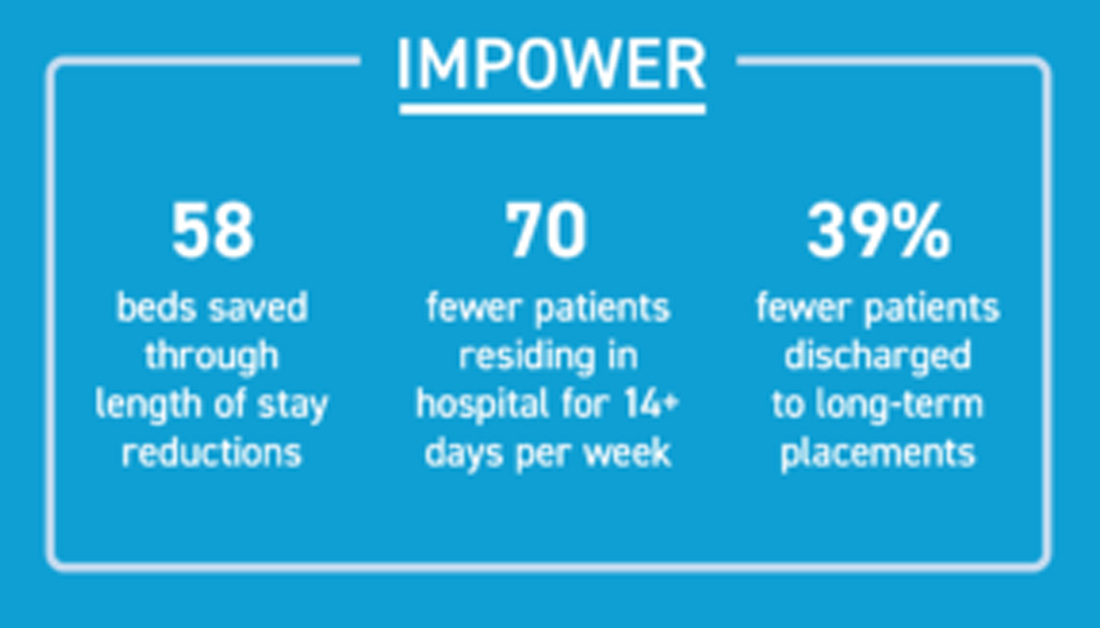
Delivering sustainable discharge and flow improvements across East Surrey

Relieving pressure on acute beds and improving outcomes in Lincolnshire
Designing and implementing an effective model for patient discharge and flow that’s owned and championed by practitioners
Embedding a ‘home first’ ethos for patients in Manchester and Trafford
Ushering in a culture shift and new model to drive better outcomes for hospital patients
IMPOWER’s collaborative approach, technical expertise and commitment to delivery have been instrumental in helping us build a model that is both robust and adaptable.

IMPOWER’s ability to set out complex data in a meaningful and engaging way has further helped keep our momentum of improvement… Remaining focussed on what is best for our patients and keeping patients at the centre of our ambition throughout. Being able to work across many partners and understanding the importance of reaching collective agreement and building relationships to enable this was powerful.
Supporting Surrey’s mental health system to improve patient outcomes
Strengths based practice at the heart of decision-making to reduce hospital stays and costs.
Reports
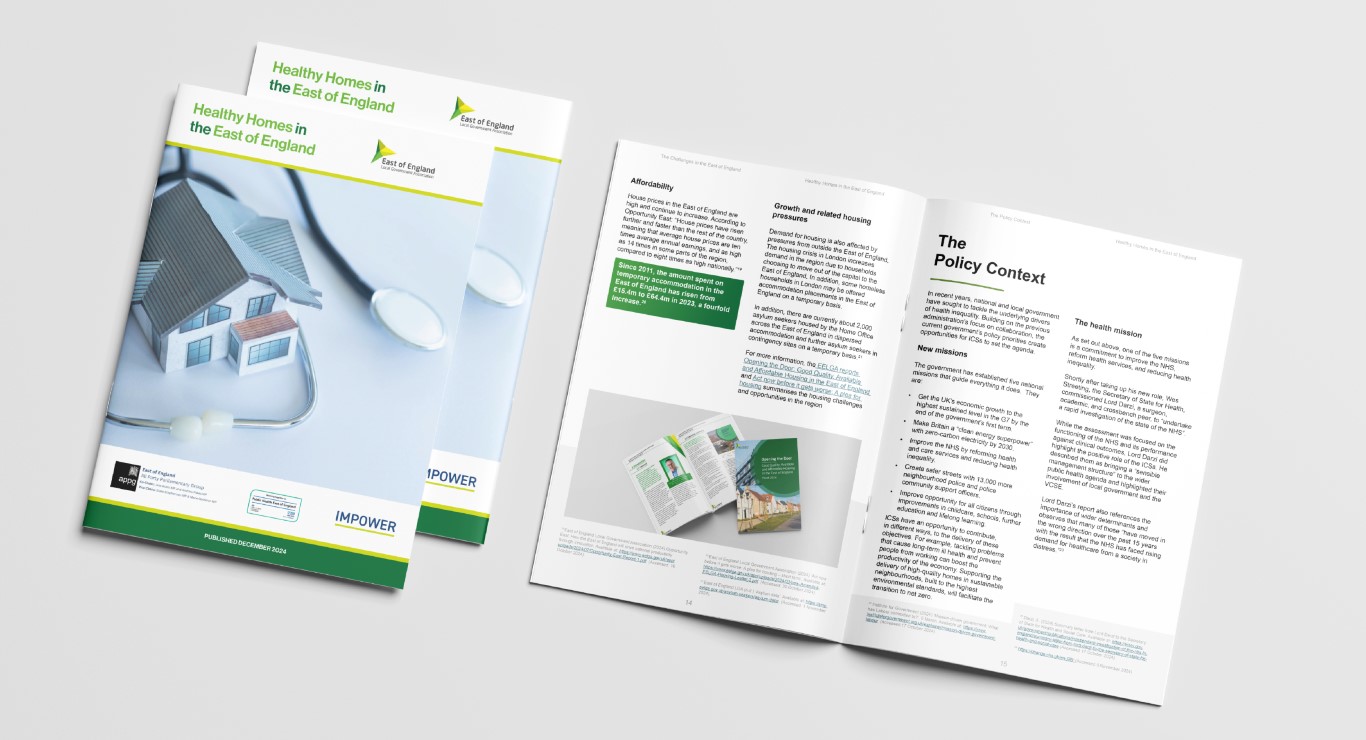
Healthy Homes in the East of England Report
How ICSs can support collaboration to deliver better housing and health outcomes in the East of England.

Academy of Medical Royal Colleges AoMRC Report
Explore why we have not yet delivered the long-promised shift to more home and community-based care.

Intermediate Care – joint report with ADASS
We have emerged from Covid needing to support higher numbers of people, in the context of ever straightened financial circumstances.

The evolving role of county authorities in Integrated Care Systems
