
Case Studies


Darlington already had a strong Adult Social Care service and a clear strengths-based vision. Like many councils, it was facing rising costs in services for people with learning disabilities or mental health needs, not only because more people needed support, but because needs were becoming more complex and some situations were escalating into higher-cost care.
Over 12 weeks we delivered a rapid diagnostic and a series of test-and-learn interventions. Using our Valuing Good Lives approach, we found that in 97% of cases there were realistic ways to help people be more independent and rely less on formal care, by focusing more clearly on the outcomes that matter to them.
By moving from ‘services first’ decisions to strengths-based, outcomes-focused support, Darlington could improve people’s day-to-day lives and reduce long-term pressure on budgets. We turned this into a clear transformation model built around four building blocks: practice; prevention; workforce and systems and partnerships. This created a practical blueprint for whole-system change helping to deliver better outcomes, reduce avoidable demand, and achieve sustainable financial impact.

Our approach is designed to build confidence quickly and in a way people trust. In Darlington, we did this through rapid test-and-learn work in some of the most complex and high-cost areas of support for working age adults.
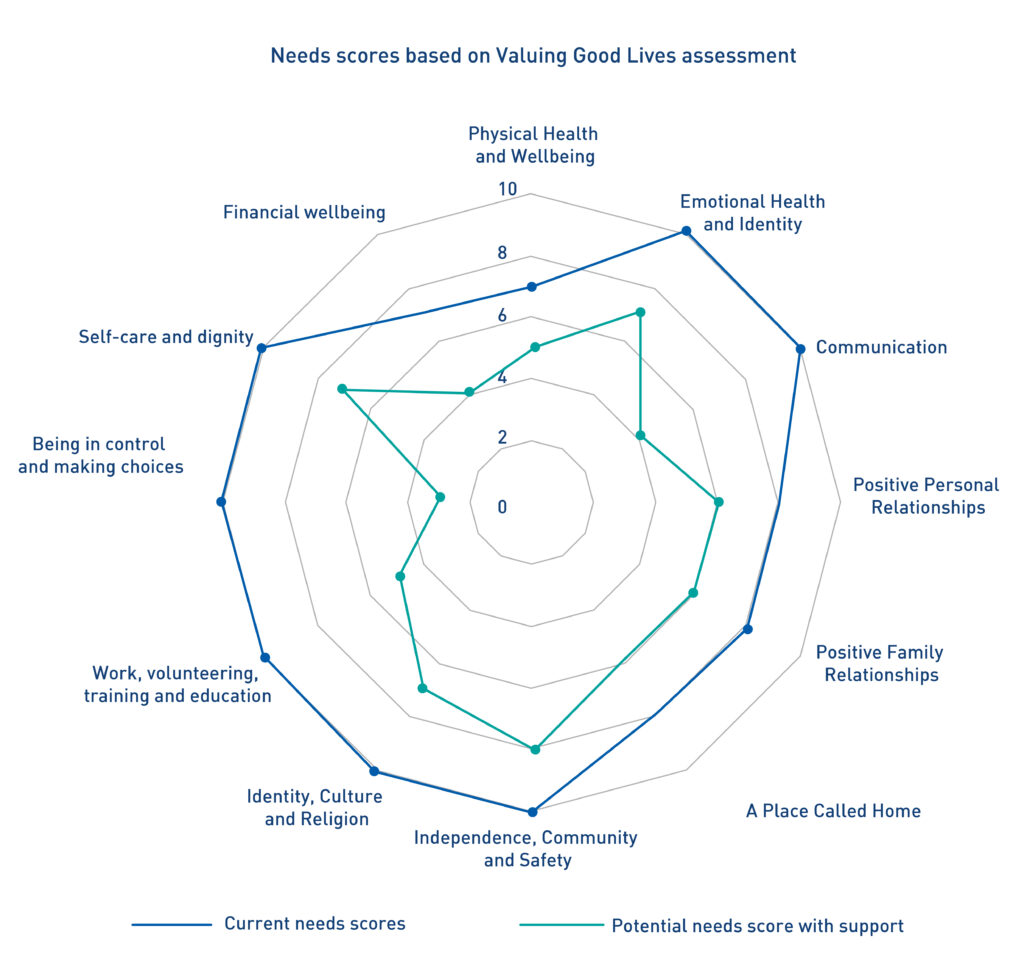
Working alongside frontline teams and providers, we used the Valuing Good Lives approach with real people to show, case by case, how support could be reshaped to increase independence. Practitioners found clear opportunities to improve outcomes and reduce the level of support, often by 20–25%, without increasing risk:
- Practitioners could see that outcomes-focused, strengths-based practice can be used consistently.
- Leaders could see that improving outcomes and managing costs can be achieved together.
- Providers could see their role in enabling independence, not just delivering services.
- Individuals benefited from a more holistic view of their strengths and needs.
An example of what this could look like for a single individual is shown (below) – with the right support, they can build on their strengths and live more independently.
We used this early evidence to set out a clear delivery model, showing how changes in practice could lead to financial impact and wider system change.

The programme identified up to £900k of impact within a single year, around 5% of Darlington’s annual budget in this area, with over £10m of financial headroom created over a three-year period.
This impact comes from helping people live more independently, reducing support where it exceeds what is needed, and preventing situations from escalating into higher-cost care. The early test-and-learn work has already shown this is achievable, with clear reductions in both support levels and cost.
Our focus is to leave behind capability, not dependency. In Darlington, this meant embedding outcomes-focused practice, giving teams practical tools and frameworks, and aligning systems and processes to support better decisions.
The programme established a continuous improvement approach, connecting practice learning with commissioning and market development so Darlington can shape its local system over time, closing gaps in provision and responding to demand as it changes. The work also strengthened leaders’ confidence to work in complexity: bringing partners together, enabling teams, and maintaining momentum rather than relying on top-down solutions alone. The result is a more resilient organisation, better able to manage demand, control costs, and improve outcomes.

Work with us
Get in touch if you’d like to discuss the challenges your organisation is facing.