
Blogs
Financial Sustainability in SEND: What We Heard, What It Means, and What Comes Next
IMPOWER and Pixel Financial Management co-hosted a shared learning event, on financial sustainability in SEND and inclusion, that brought together more than 160 leaders from across local government. The event was chaired by Rob Powell (Executive Director, Warwickshire County Council) with contributors, including Adrian Jenkins from Pixel Financial Management, Ebony Hughes and Rob Hart from IMPOWER and Rachel Adler, Director of Strategy & Performance, Hertfordshire County Council. What emerged was not just a discussion about deficits and funding mechanisms, but a set of deeper, more fundamental questions about systems, trust, and the future direction of SEND reform.
This blog reflects on the key themes and questions that surfaced during the session; and what they mean for local areas navigating SEND reform right now.
1. The SEND Deficit: Crisis Averted, But the System Still Under Strain
There was broad consensus that the High Needs Stability Grant has averted an immediate financial crisis for many local authorities. Writing off around 90% of historic deficits offers significant short-term relief and stability.
However, one message came through clearly:
Paying down historic debt does not fix the underlying problem.
Across the session, contributors highlighted that local areas are still grappling with:
- Continued growth in EHCP numbers and complexity
- In-year pressures continuing to rise, even with increased funding
- Ongoing residual High Needs costs (the remaining 10%) that remain material for councils
- Rising council spend on SEND that is funded from core council budgets, such as transport and assessment costs.
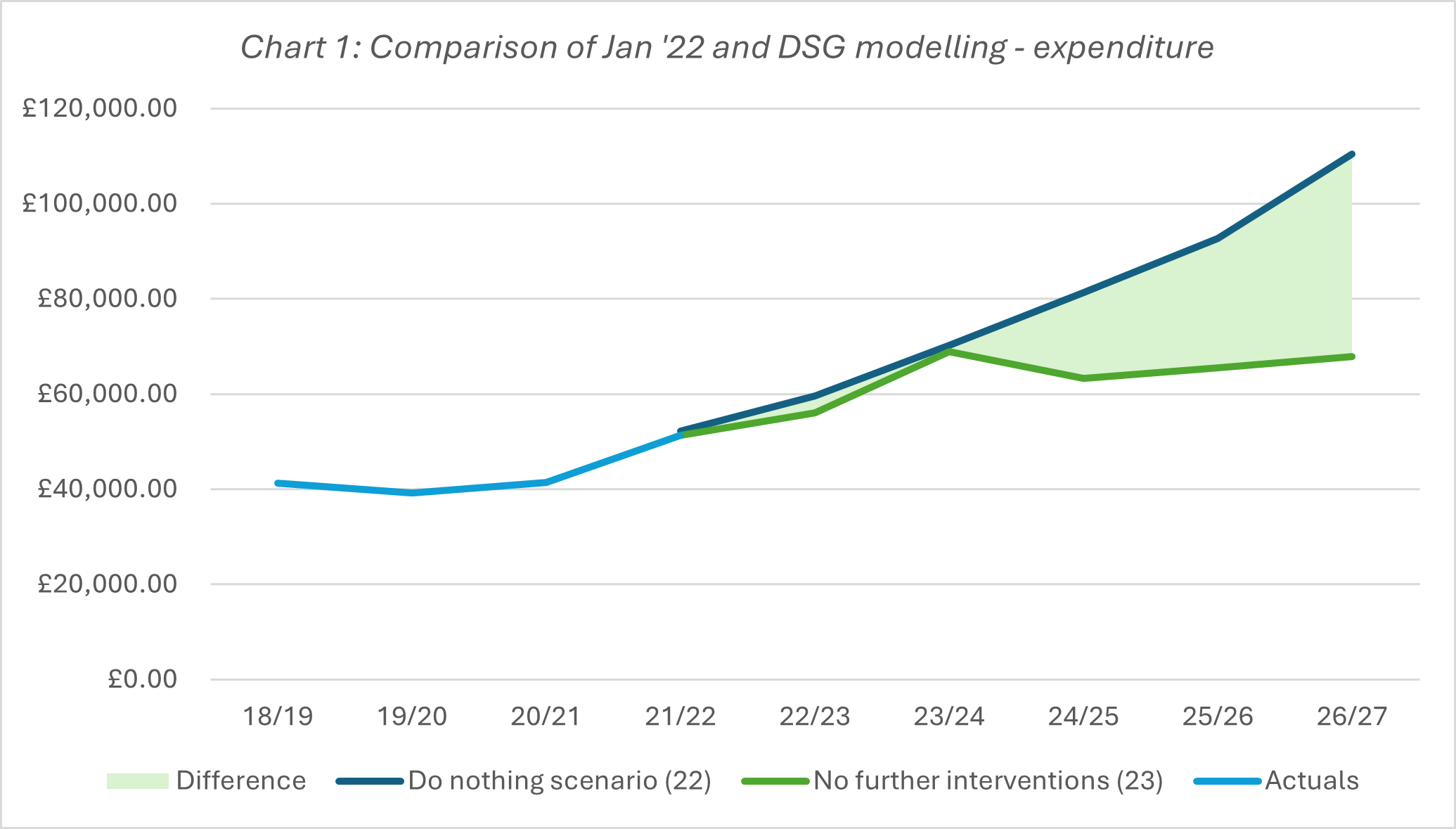
Several speakers described the grant as a temporary remedy, not a structural solution. Without meaningful reform to demand, provision, and inclusion, the system risks re‑accumulating deficits at pace.
Key question: How do we use the breathing space created by the grant to fundamentally change the system, not just stabilise it?
2. Funding Reform vs. System Reform: We Can’t Separate the Two
A recurring tension was the risk of treating SEND sustainability as a purely financial problem. As several contributors stressed, financial sustainability flows from system design, not the other way around. This has to be approached considering both “hearts and minds.”
Themes that came through strongly included:
- The link between educational outcomes and long-term cost
- The importance of early intervention and prevention, not cost containment
- The danger of short-term savings that create future cost escalation
This challenges councils to move beyond an “in-year budget lens” and instead take a whole-system, medium-to-long-term view: including education, health, transport, and adult services.
Key question: Are our SEND strategies primarily about managing spend? Or reshaping the system so that outcomes improve and costs reduce over time?
3. Inclusion, Mainstream Schools, and the Role of Accountability
One of the most animated parts of the discussion focused on inclusion, particularly the role of mainstream schools.
Several tensions were highlighted:
- Declining inclusion compared to earlier decades, despite strong policy intent
- A system where schools may feel disincentivised to include pupils with SEND
- Misalignment between inspection outcomes and lived inclusion practice
- A curriculum and accountability framework that may unintentionally push children towards specialist provision
Participants were clear: local authorities cannot solve this alone. National policy, inspection frameworks, and accountability mechanisms all play a role in shaping behaviour at system level, ensuring that co-production is at the heart.
Key question: What would it take for inclusion to be everyone’s responsibility: and to feel safe, supported, and achievable for schools?
4. From Data to Delivery: Why Understanding the Problem Isn’t Enough
Many contributors reflected that understanding SEND pressures is no longer the main challenge. The harder work lies in turning insight into action.
Barriers discussed included:
- The complexity of linking operational data with financial forecasts
- The pace at which demand and cost assumptions change
- The difficulty of securing upfront investment while under wider financial pressure
- Capacity constraints across SEND, finance, and transformation teams
There was strong alignment around the need for:
- A shared evidence base between finance and service leaders
- Clear assumptions about what will change, at what scale, and how fast,
- Dashboards and trajectories that track whether reform is actually working
- Reflecting “soft” factors such as culture and behaviour and system incentives as well as “hard” numbers such as demand and capacity.
Key question: Do we have the right tools and the shared confidence, to make system-wide decisions over multiple years, not just balance this year’s budget?
5. Trust, Central–Local Relationships, and Policy Uncertainty
Another powerful theme was trust: particularly between local government and central government.
While the SEND Reforms are widely welcomed, concerns were raised about:
- Uncertainty beyond the current spending period
- How risks and costs will be shared in future
- The long-term implications once statutory protections and interim arrangements end
Several contributors reflected on past initiatives where warnings were visible, but action came too late, leading to escalating costs and reduced confidence.
Key question: How do we plan responsibly when future funding arrangements, accountability, and risk-sharing remain uncertain?
6. Local Government Reorganisation: A Growing Complication
For areas undergoing local government reorganisation, the challenges multiply.
Issues raised included:
- Submitting SEND reform plans without knowing future boundaries
- How historic deficits will be disaggregated across new authorities
- Risks that some new councils could inherit disproportionate pressure
- Implications for sufficiency planning, transport, workforce, and capital investment
Add to that the ongoing reorganisation within ICBs, leading to further uncertainty and complexity.
The message was clear: SEND cannot be an afterthought in LGR. Decisions made now will shape financial and service realities for years to come.
Key question: How do we ensure SEND outcomes and sustainability are built into new structures, rather than inherited as unresolved risks?
In Conclusion: A Moment of Opportunity: If We Use It Well
The session surfaced tough truths, but also a shared sense of opportunity.
There was strong alignment around the idea that:
- The current moment offers space to reset, not just recover
- Financial sustainability depends on better outcomes, not tighter controls alone
- Change will take time, trust, and persistence: locally and nationally
Perhaps the most important takeaway was this:
We cannot afford to kick the can down the road again.
The challenge now is to translate reform into delivery, hold our nerve through complexity, and keep children and families at the heart of a system that must work better – for everyone.