
Blogs
Seizing the moment: five things local authorities must do now that draft SEND reform plans have been submitted
Across the country, local authorities have submitted draft SEND reform and improvement plans to the Department for Education.
The real challenge now is delivery – translating ambitious reform plans into deliverable transformation whilst managing escalating demand, workforce pressures, and financial sustainability risks.
Through the DfE Change Programme, IMPOWER has supported 32 LAs to move from reform ambition into delivery. across SEND, inclusion, sufficiency and children’s transformation programmes. One thing is becoming increasingly clear: the areas making the fastest progress are those moving quickly from strategy to mobilisation, with a strong focus on delivery confidence, partnership ownership, and long-term system redesign.
IMPOWER has engaged with over 100 councils and worked directly with more than 40 local authorities to support SEND transformation and Local Area SEND reform plans. Drawing on this experience, we have set out below our view of the five key areas local authorities should be focusing on now to get ahead of the upcoming changes:
1. Move from strategy to mobilisation – fast
Many areas now have agreed priorities. The risk now is delaying them for too long. The question is: how quickly can change plans be implemented?
Mobilisation needs to happen early and deliberately. This means:
- Defining deliverable workstreams
- Understanding sequencing and dependencies, and what changes operationally
- Clarifying governance and decision making
- Setting clear success measures across the next 6 to 24 months
SEND reform cannot sit as a standalone programme. It needs to connect into wider children’s services transformation, inclusion, sufficiency, commissioning and finance planning.
Early mobilisation is key and starts with setting a shared ambition. while remaining realistic about operational delivery capacity.
2. Bring partners together to align on a single delivery plan
SEND reform is system wide.
Schools, health partners, parent carer forums, providers and the voluntary sector all have a critical role to play in delivery. Yet partners have different interpretations of the reform plan, priorities and pace of change.
The next step for systems is creating:
- A shared delivery roadmap
- Clear ownership of actions
- Agreed measures of impact
- Collective accountability
Reform requires behavioural and cultural change, not just process redesign.
Ensuring that schools, early years settings, and post-16 providers buy into the vision is crucial. SEND reform needs to be done with education settings not to them.
3. Put co-production at the heart of delivery, not alongside it
Co-production cannot sit alongside delivery – it must shape it.
Many local areas already have multiple improvement initiatives running simultaneously across inclusion, EHCPs, commissioning, alternative provision, post-16 provision, sufficiency and early help. Without strong co-production, programmes can quickly become disconnected from the lived experience of children, young people and families. The strongest systems are embedding co-production in delivery to improve outcomes, build confidence in reform plans and support sustainable long-term improvement.
Co-production should be an ongoing mechanism for shaping priorities, testing changes, and holding systems to account for the difference they are making.
4. Using data to drive decisions
Local authorities and system partners are increasingly using data to:
- Understand demand and escalation
- Target intervention where they are most effective
- Forecast future sufficiency pressures
- Track impact of reform on outcomes and spend over time
Without data-informed decisions, systems lack a shared understanding of future demand trajectories.
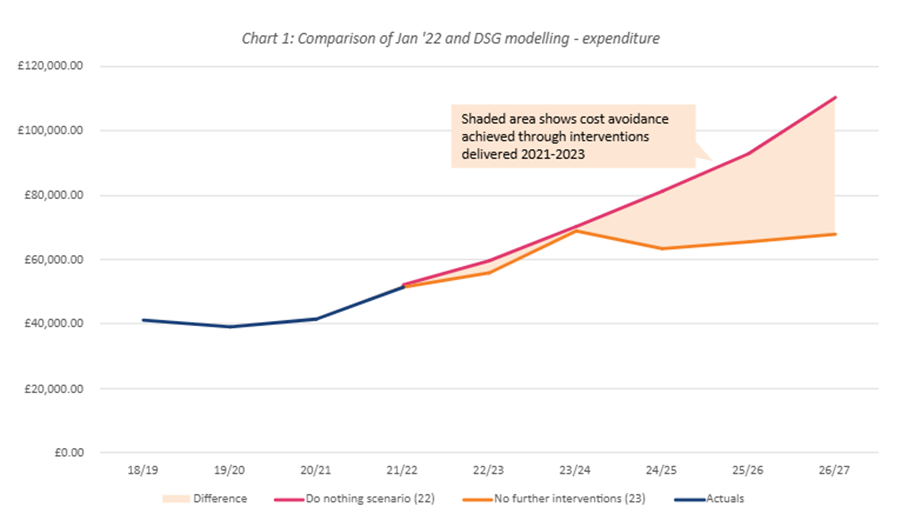
Leading systems are using data not just for reporting, but to actively support strategic decision making, prioritisation and investment planning. This includes scenario modelling and understanding what is genuinely influenceable within the local system.
A stronger evidence base increases partner engagement and confidence in quarterly reporting, and results in informed decisions about transformation priorities and investment.
For example, one local authority we worked with identified £92m in cost avoidance over five years by intervening earlier, meeting needs more effectively and implementing system-wide interventions.
5. Think creatively about workforce and inclusion challenges
Workforce pressures may be one of the greatest challenges to sustainable SEND reform.
Across education, health and care systems are experiencing challenges around recruitment, retention and escalating complexity of need, and increasing requests for EHCNAs are placing additional pressure on already stretched services.
While implementing reforms, such as Experts at Hand, areas will continue to work within an existing statutory framework where demand is growing. Expanding the workforce and balancing expertise to meet demand and intervene earlier by strengthening inclusion presents a significant challenge.
The strongest areas are starting from a different question: what capability do we already have in the system, and how do we use it differently?
Workforce conversations need to move beyond traditional models and focus on:
- Strengthening inclusive practice in mainstream settings
- Developing workforce capability differently
- Building confidence and consistency across the system
- Using multidisciplinary approaches more effectively
- Identifying opportunities for earlier intervention and prevention
- Supporting schools and settings to manage complexity sustainably
Long-term reform depends on reconfiguring the workforce around future need, ensuring staff have the capacity, capability and support required to deliver more inclusive and sustainable outcomes.
Turning ambition into delivery
Plans are in place – the challenge now is turning them into measurable change at pace. Local areas are under pressure to balance immediate operational pressures with the need for long-term transformation.
The strongest systems are already focusing on mobilisation, operational grip, shared ownership and practical implementation.
At the same time, they must balance the demands of today’s SEND system with the design and implementation of tomorrow’s, requiring careful prioritisation, workforce capacity and strong leadership.
At IMPOWER, we are supporting local authorities to translate reform ambition into practical delivery, helping systems strengthen inclusion, improve outcomes, manage demand and build more sustainable models for children, young people and families.
If you’d like to speak to us about how we are supporting other local authorities on their transformation programmes, please get in touch via [email protected].