
Blogs
Fiscal devolution: a moment England can act on

Last week, at my first UKREiiF conference, I joined a roundtable on fiscal devolution hosted by The MJ and IMPOWER, alongside Core Cities Chief Executives and Mayoral Combined Authority Chief Executives. It was a conversation that stayed with me on the train home.
There is a real moment to seize. Not in the abstract debate about devolving tax powers, but in the opportunity to design a settlement that aligns economic growth with the outcomes that matter to people in our cities. A settlement that funds the demand-side reality where councils sit, as well as rewarding the growth-side success that combined authorities can drive.
The opportunity, in other words, is to make growth and inclusion work together rather than in tension.
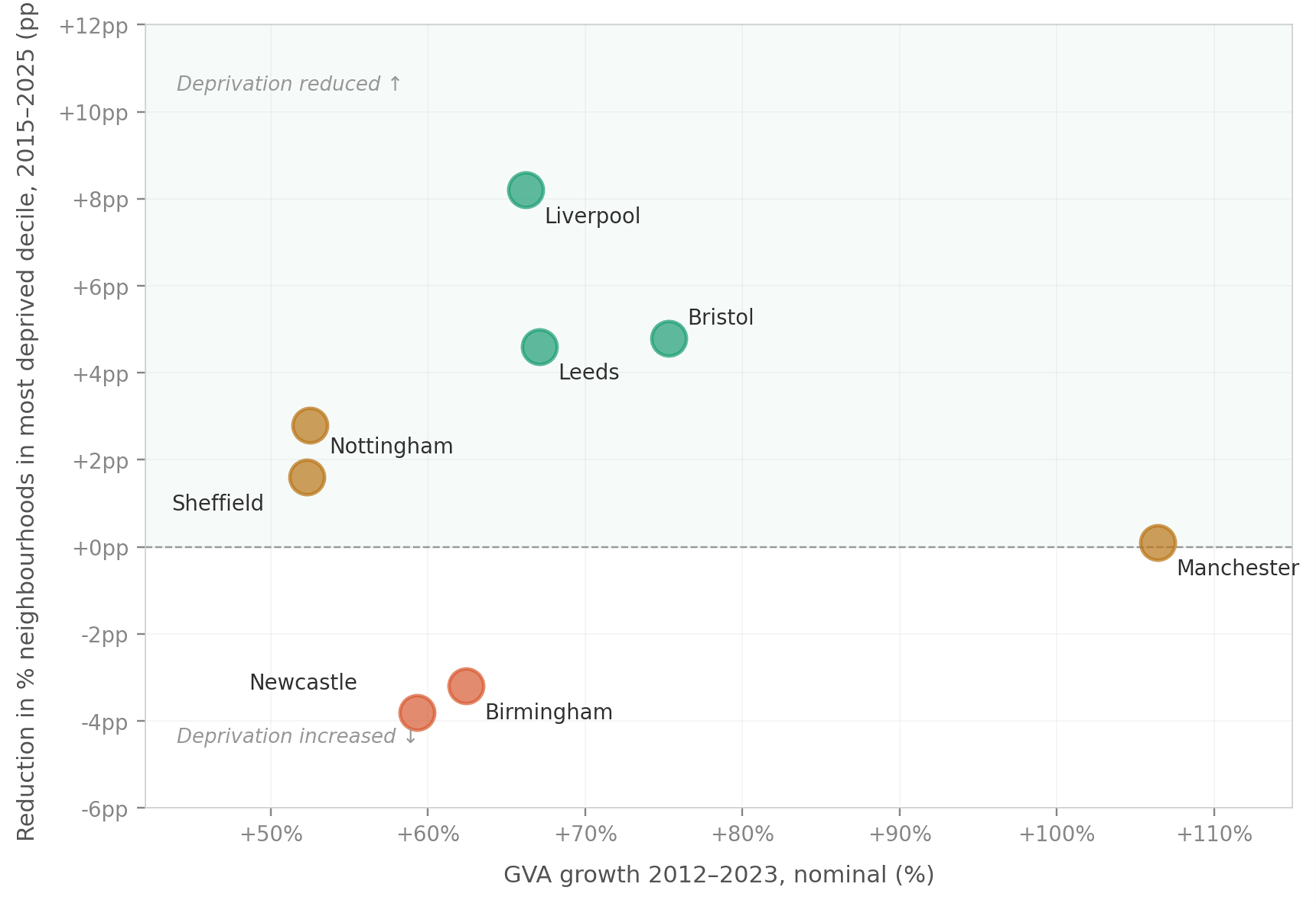 Manchester is a case in point. As the graph above shows, strong GDP growth does not automatically translate into reduced deprivation. As I set out in my recent article for The MJ, our current devolution settlement creates practical challenges in joining up economic development and social policy.
The opportunity feels immediate. Two years into this parliament, growth remains anaemic, and government is looking outward for ideas. The political context makes the timing favourable. This is a moment for cities and regions to be proactive and agenda-shaping, rather than waiting for central government to lead.
What struck me most, though, was the quality of leadership in the room. The depth of operational experience, the analytical seriousness, the gravitas. Government, whatever shape it takes over the months ahead, has more capability and talent to draw on at regional and local level than it sometimes acts as if it does. That prize becomes even greater if Core Cities and mayoral authorities push for it together. A shared agenda, co-developed, is harder to assemble, but immeasurably more powerful.
As William Gibson put it, the future is already here – it’s just not evenly distributed. The existing settlements in Scotland, Wales and Northern Ireland show that fiscal devolution can strengthen accountability and enable more effective tax policy. In England, smaller examples are already pointing the way: visitor levies, workplace parking levies, and second-home council tax premiums. A more substantive settlement would be a significant step, but it would not be a leap into the unknown.
The MJ will publish the full discussion in the coming weeks. In the meantime, IMPOWER is well placed to support those shaping the case for change. Our team brings together national and local devolution expertise, combining frontline local government experience with analytical and financial modelling capability. We work alongside councils and combined authorities to develop evidence-based strategies, assess options, and build the consensus needed to turn ambition into delivery.
The capability is already here. The question is whether we choose to use it.