
Blogs
Lessons in co-production and transformational change
I recently finished an internship at IMPOWER and supported the Department for Education (DfE) SEND & AP Change Programme. Having studied Education at Durham University and worked in a range of primary schools and navigated challenges with dyslexia as a child, I have both lived experiences of special education needs and disabilities (SEND) and have worked within systems that support the improvement of SEND education. My time at IMPOWER has strengthened my understanding of the importance of collaboration and co-production as critical factors in facilitating meaningful change in complex systems. Here are some key reflections of my internship that have helped build my understanding of this.
Insights from ‘live’ High Needs projects at IMPOWER
Firstly, reflecting on some of my conversations with IMPOWER colleagues, I had a chance to learn more about the work happening across the company. The hard work and commitment to making a real difference in the high needs sector has been really inspiring.
This has opened my eyes to the scope of projects benefiting from IMPOWER’s transformational approach. One of the standout lessons was the power of co-production. The project focused on children with complex needs transitioning into mainstream reception classes. IMPOWER’s Valuing SEND tool allowed professionals from multiple educational settings to collaborate and share resources and expertise to create a menu of tailored support. This enabled some of the children who were planning to move to specialist settings to remain in mainstream settings. This conversation demonstrated the value of co-production by bringing together professionals, parents/carers and young people and sharing power and responsibility to co-create improvements and lasting change.
The DfE SEND & Alternative Provision (AP) Change Programme
I experienced how the programme’s design strengthens collaboration as the REACh team is made up of a consortium of people from different areas of expertise to facilitate the system-wide outcome. It was an exciting time to join the programme, as the team have been capturing rich insights through engagements and relationships made with local authorities from year one. And it was interesting to see the effect of the new Government and Ofsted’s enhanced focus on inclusion and what that means for the programme.
I enjoyed capturing the voices and feelings of young people with SEND. Research shows that when children are actively involved in decision-making processes and where their practical solutions are valued, children’s access to learning improves. Embedding young people’s lived experience has, therefore, been an important part of the programme.
Engaging with young people
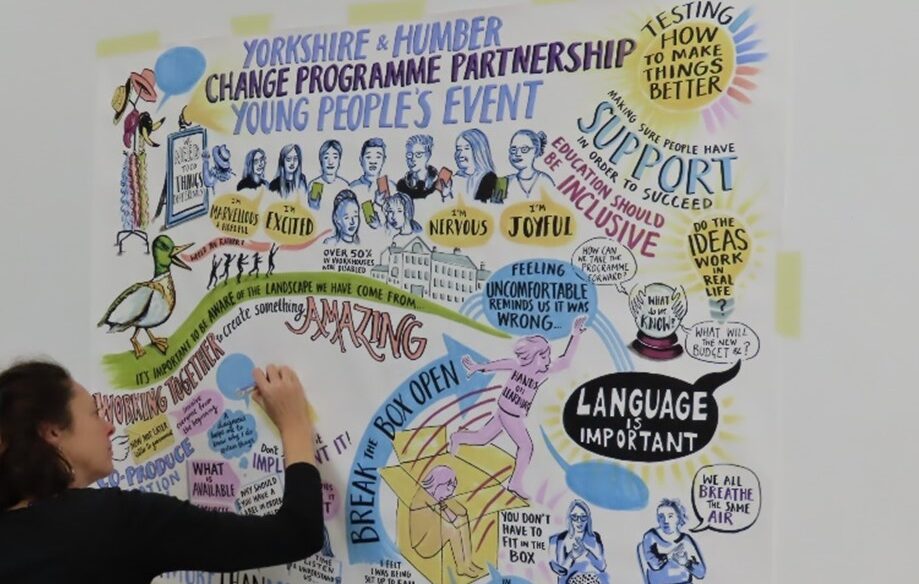
One of these was an event in the Yorkshire and Humber Change Programme Partnership (CPP), where young people with SEND came together to discuss the changes they would like to see in the system.
Young people shared their experiences, including feelings of exclusion and frustration within the current education system. Some shared that the education system made them feel “set up to fail”, while others described the process of getting support as feeling like they had to “break” until they were listened to. These powerful stories fuelled many young people to develop ideas and advocacy material during the workshops. One poignant outcome was a collective letter titled ‘NOW not Later’ addressed to the Department for Education. The event had fantastic feedback and allowed young people the space and platform to voice their opinions on decisions that will affect them. I have kept the ‘next steps’ arising on the agenda to be picked up by DfE, and as an outcome of the event, more CPPs across the country are planning similar engagements, which is integral to rebuilding a system that prioritises this cohort of young people.
The planning of Kickstart
The Kickstart Programme aims to improve the employment of people with lived experience which included providing CV and interview support sessions to young people with SEND. SEND stigmatisation can negatively impact school experiences and career opportunities, impacting how individuals view themselves as learners and workers. In my own personal experience, although language around SEND is helpful in leading to support, homogenised language simultaneously leads, in some cases, to harmful societal assumptions.
Initially, my dyslexia made me feel like I had a ceiling on what I could achieve, however, reading literature like Ron Davis ‘The Gift of Dyslexia’ helped reframe my understanding. Dyslexia brings strengths as well as challenges – such as creative thinking, heightened imagination and much more! Therefore, I see so much value in the Kickstart initiative in helping young people reframe the language they use around SEND. I am excited to hear about the outcomes of the workshops and hope that the work on CVs can help young people recognise their strengths.
Meaningful change is possible
Understanding the areas of control within resource-constrained systems, as we see in the SEND system today, has shown me that meaningful change can be possible. Thank you to everyone at IMPOWER and REACh for making the last three months a really enriching experience. And a big shout out to Izzie Hurrell for being an AMAZING manager and mentor and making me feel so welcome!
The ‘NOW not Later’ message to the Department for Education should be something that we all take away as we work together to improve the experience for children, young people and families with SEND to thrive in the education system.